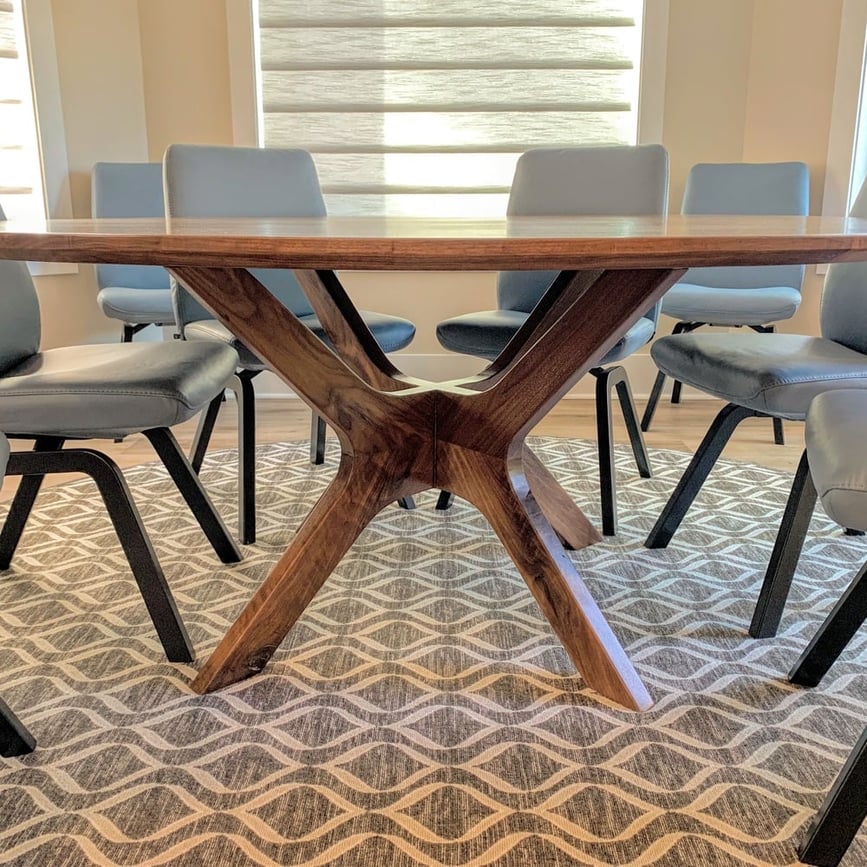
Quick answer: Check the edges, underside and construction details together. No single clue proves a table is solid wood, and good veneer is not automatically poor-quality furniture.
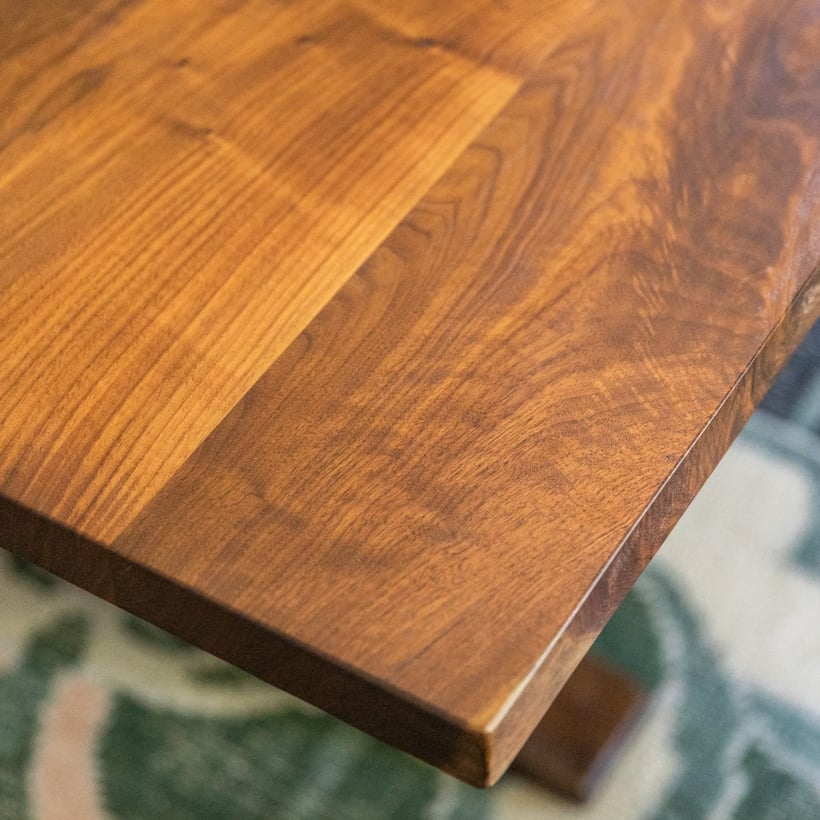
1. Ask for a precise description
Instead of asking only whether a piece is wood, ask: “Is the tabletop solid hardwood throughout, or is it veneered over another material?” Then ask separately about the base, apron and any extension leaves. A clear specification is more useful than a broad marketing label.
2. Compare the top, edges and underside
Look for grain relationships, seams and exposed panel edges in more than one location. Solid edging can conceal a veneered core, while breadboard ends can change the grain direction on a solid wood top.
An underside may be finished differently or have a backing veneer, so matching color alone is not proof. If the core is concealed, ask for the construction details rather than trying to identify it from one photograph.
3. Inspect how it is assembled
Check whether the connections look appropriate to the design and whether the seller can explain how the top is supported and allowed to move. Bolts, brackets and knock-down connections can be part of well-made furniture. Their presence does not establish the tabletop material.
Weight is also inconclusive: a composite panel can be heavy, and different solid woods have different densities.
4. Ask about care and restoration
Ask which finish is used, how it is maintained and what repair or refinishing options exist. Solid wood often offers more restoration scope. Some veneered pieces can also be repaired or refinished, depending on the veneer, core and damage.
5. Keep the specification
Photograph the product label, record the materials and retain the seller’s written answers with your purchase information. If the answers remain vague, compare another option before committing.
This short checklist complements our detailed guide linked below. It helps you collect useful evidence without assuming that veneer is always a defect or that solid wood alone guarantees good construction.
Before you decide
- Ask whether the top is solid hardwood throughout or a veneer over a core.
- Check multiple edges and the underside; solid edging can conceal a veneered panel.
- Request the construction specification and repair options in writing.
Plan the next step
Use this checklist when shopping, then read our detailed solid-wood identification guide.
Read the detailed solid wood guide. Use the Wood Guide and Size Guide where they help with your choices.
Request a Quote or Schedule a Design Consultation with Luke in Wilmington, North Carolina.