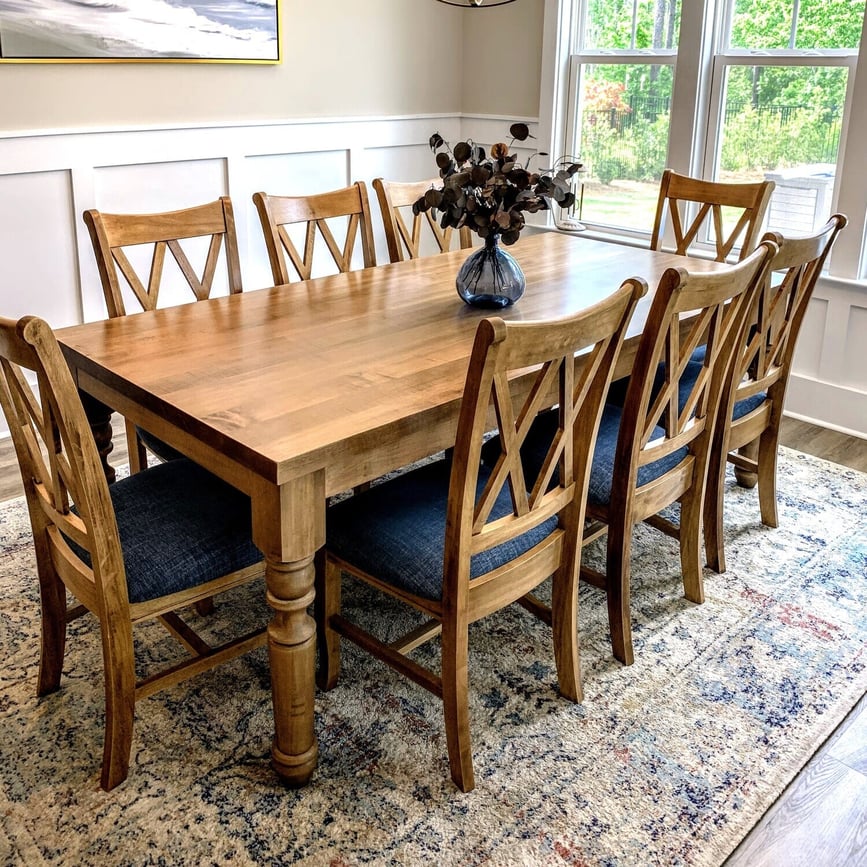
Quick answer: First separate floor-related rocking from a loose base. Move the table carefully, check its feet and inspect accessible fasteners before attempting a repair.
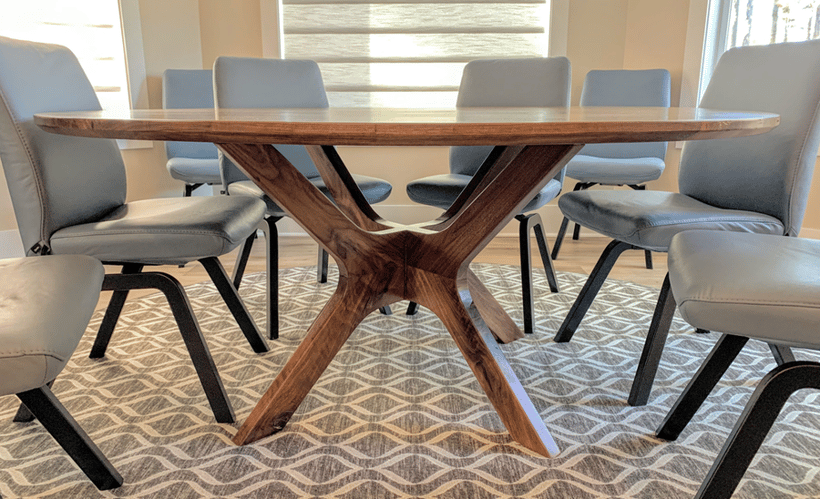
First identify the kind of movement
A table can rock because its feet do not all meet the floor, or it can sway because the base or a connection is loose. Those problems need different solutions. Clear the top and ask someone to help before moving a heavy piece.
Try the table carefully in a nearby position. If the rocking changes, an uneven floor or a missing or worn glide may be involved. This is a useful clue, not proof that a particular leg is too short.
Check feet and accessible connections
Look for missing pads, damaged feet or an adjustable glide that needs attention. A suitable temporary pad can help identify a floor-related issue. Ask the maker which permanent leveling approach is appropriate before drilling into the base.
On a knock-down base, accessible bolts may need careful tightening according to the maker’s instructions. Do not overtighten or use power tools indiscriminately; damaged threads or crushed material can make the problem worse.
Know when to stop
A cracked component, failed glued joint or movement around a structural connection needs an assessment. Adding brackets, forcing a joint apart or applying glue over an old repair is not a universal solution.
Wobble does not automatically prove that a table was poorly made. Floor changes, moving damage, wear and loose hardware can affect furniture of different construction types. A stable, suitable repair starts with identifying the cause.
| What you notice | Useful next check |
|---|---|
| Rocking changes with the table’s position | Inspect the floor contact points and glides. |
| Base sways while the feet stay planted | Inspect accessible connections and ask the maker about the structure. |
| A split, broken part or failed joint is visible | Stop using the table for heavy loads and arrange an assessment. |
Plan a stable table around the room
When choosing a new table, consider its size, support positions, base design and the floor where it will stand. Confirm delivery, assembly and any leveling arrangements with the maker. Bring chair widths and end-seating needs into the same discussion.
Before you decide
- Check whether rocking changes on another part of the floor.
- Look for missing glides and loose accessible bolts.
- Ask a furniture professional to assess cracked wood or a failed glued joint.
Plan the next step
Bring questions about table stability, base design or seating clearance to your consultation.
Explore dining table collections. Use the Wood Guide and Size Guide where they help with your choices.
Request a Quote or Schedule a Design Consultation with Luke in Wilmington, North Carolina.