Dining table size is one of those things that seems simple until you get it wrong. Too small and your family feels cramped at every meal. Too large and you can't comfortably walk around the table, or it overwhelms the room. The standard sizes sold at retail are built around average rooms and average families — which may or may not be yours.
Here's how to actually figure out the right size for your space.
How many people do you need to seat?
The general rule is to allow 24 inches of table length per person for comfortable seating. Some people prefer a little more — 26–28 inches — especially if you're using chairs with wide arms.
For a family of 4: 60–72 inches long
For a family of 6: 72–84 inches long
For a family of 8: 84–96 inches long
For a family of 10 or more: 108 inches or longer, or consider an extension table
These numbers are for rectangular tables. Round and oval tables have different dynamics — a 60-inch round table seats 6 comfortably because you don't lose the corner positions.
How wide should the table be?
Width is often underestimated. A table that's too narrow leaves no room for serving dishes, centerpieces, or elbow space.
For most dining situations, 36–42 inches wide is ideal. 36 inches gives you comfortable seating on both sides and room for dishes. 40–42 inches is more comfortable for larger gatherings or if you like to leave serving dishes on the table during a meal. If you like to line the center of the table with food and decor, 48" is perfect.
Narrower than 32 inches gets cramped fast. Wider than 48 inches and people across the table start to feel very far away — it works in formal settings but less well for everyday family meals.
How much room do you need around the table?
This is the part most people skip, and it's what determines whether your table actually fits your room.
You need at least 36 inches of clearance between the edge of the table and any wall or piece of furniture. This allows someone to push their chair back and stand without hitting anything.
48 inches of clearance is ideal — it allows someone to walk comfortably behind a seated person.
To calculate: measure the length and width of your dining room. Subtract 72 inches from each dimension (36 inches of clearance on each side). The remaining space is the maximum table size that will work comfortably.
For example: a 12-foot by 14-foot room (144 × 168 inches) minus 72 inches in each direction gives you a maximum table of 72 × 96 inches. That's the right size for this room, not the 108-inch table you saw online.
What about extension leaves?
Extension leaves are one of the smartest features you can add to a custom dining table if you entertain regularly but don't need a huge table every day.
A table that stores at 72 inches and extends to 96 inches with one or two leaves gives you a lot of flexibility. You seat your family of 4 comfortably most nights, and you seat 10 people comfortably when it matters.
The key with extension leaves is the mechanism. A well-made extension table should open smoothly, align perfectly when extended, and feel solid once the leaves are in place. This requires good hardware and precise joinery — it's worth doing right.
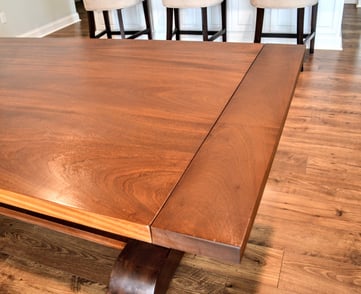
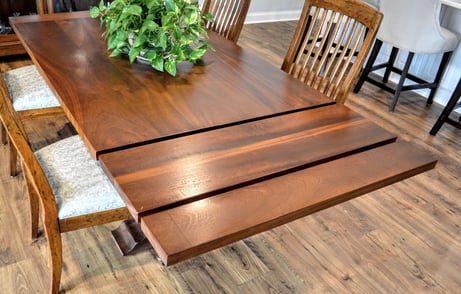
A table from Luke's Furniture Company with a breadboard extension style.
What about table height?
Standard dining table height is 30 inches. This works with standard dining chairs, which typically have a seat height of 17–19 inches.
Counter-height tables (36 inches) pair with counter-height stools and have a more casual feel — popular for kitchen islands and breakfast nooks.
If you have family members who are notably tall or who use mobility aids, table height is worth customizing. This is one of the genuine advantages of ordering custom.
Ready to see what a table built specifically for your home looks like? Tell us about your space and we'll put together a design and quote — no pressure, no obligation.