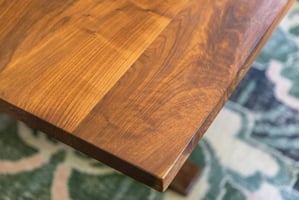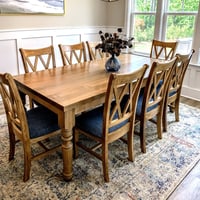
One of the details that separates a visually substantial dining table from one that looks a little thin is top thickness. The thickness of the tabletop also affects structural performance — a thicker top is stiffer and less prone to movement over time.
 Here's how tabletop thickness works and what the right choice is for different situations.
Common tabletop thicknesses
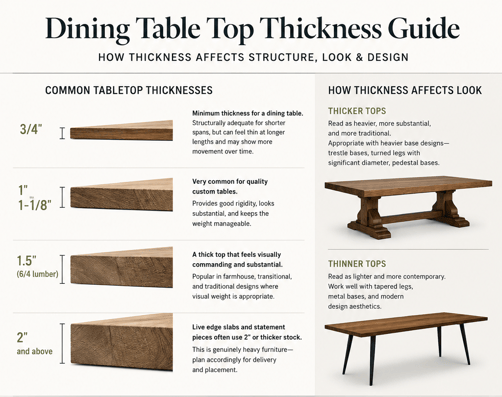
3/4 inch: This is the minimum you'd want for a dining table. It's structurally adequate for shorter spans, but at longer lengths a 3/4 inch top can feel a little thin and may show more movement over time.
1 inch to 1-1/8 inch: A very common thickness for quality custom dining tables. It provides good rigidity, looks substantial, and keeps the table weight manageable.
1.5 inch (6/4 lumber): A thick top that feels visually commanding and substantial. Popular in farmhouse, transitional, and traditional designs where visual weight is appropriate.
2 inch and above: Live edge slabs and statement pieces often use 2-inch or thicker stock. This is genuinely heavy furniture — plan accordingly for delivery and placement.
How thickness affects look
Thicker tops read as heavier, more substantial, and more traditional. They're appropriate with heavier base designs — trestle bases, turned legs with significant diameter, pedestal bases.
Thinner tops read as lighter and more contemporary. They work well with tapered legs, metal bases, and modern design aesthetics.
The relationship between top thickness and leg/base design matters. A 2-inch thick top on hairpin legs looks visually unbalanced. A 3/4-inch top on a heavy trestle base looks similarly off.
Edge profile and perceived thickness
The edge profile of the top significantly affects how thick it appears. A square-edge top shows the full thickness and looks substantial. A beveled or waterfall edge reduces the apparent thickness at the corners — a 1.5-inch top with a waterfall edge looks thinner and more refined than its actual dimension.
Conversely, a breadboard end — a separate piece of wood attached perpendicular to the top boards at each end — adds visual mass and makes even a thinner top look more substantial.
At Luke's Furniture Company, we discuss top thickness and edge profile together because they work as a system. What looks right depends on the overall design of the piece.
Ready to get started?
Ready to see what a table built specifically for your home looks like? Tell us about your space and we'll put together a quote — no pressure, no obligation. Request a Quote from Luke's Furniture Company.