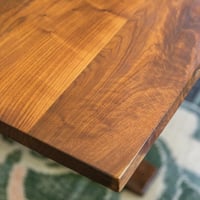
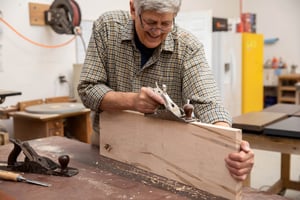
When you think of Amish furniture, certain qualities immediately come to mind: timeless design,...
“Solid wood” is one of the most commonly used—and misunderstood—terms in furniture marketing. Many pieces advertised as solid wood contain only a small amount of real lumber, with the rest made from veneer, MDF, or engineered materials.
For homeowners investing in high-quality furniture, knowing the difference matters. Solid wood furniture performs differently, lasts longer, and can be repaired or refinished over time. Veneer and MDF often cannot.
This guide explains how to tell if furniture is truly solid wood, what red flags to look for, and how to make confident buying decisions before spending thousands of dollars.
Why “Solid Wood” Is So Often Misleading
In furniture marketing, solid wood doesn’t always mean what buyers think it means.
A piece may be described as:
- “Solid wood construction”
- “Hardwood frame”
- “Made with real wood”
- “Wood furniture”
…but still contain:
- Veneer over MDF or plywood
- Particleboard cores
- Only solid wood legs or frames
In many cases, only the visible or structural parts are solid wood—while large surfaces like tops, sides, and panels are not.
Understanding construction details is the key to telling the difference.
What Solid Wood Furniture Actually Is
True solid wood furniture is made from boards of real lumber throughout the entire piece.
That means:
- Table tops are solid wood planks
- Legs, aprons, and bases are solid wood
- Panels are solid wood (not wrapped cores)
- Grain runs continuously through the material
Solid wood furniture expands and contracts naturally with seasonal humidity changes. This movement is normal—and is accommodated through proper joinery.
What Veneer and MDF Furniture Is
Before learning how to spot solid wood, it helps to understand what it’s not.
Veneer
Veneer is a thin slice of real wood glued over:
- MDF
- Plywood
- Particleboard
Veneer can look beautiful when new, but:
- It cannot be sanded or refinished easily
- Once damaged, it usually cannot be repaired
- It relies entirely on the substrate beneath it
MDF (Medium-Density Fiberboard)
MDF is made from wood fibers and resin compressed into sheets.
Common characteristics:
- Very smooth
- Heavy for its size
- No visible grain
- Swells when exposed to moisture
- Fails catastrophically when damaged
7 Ways to Tell If Furniture Is Really Solid Wood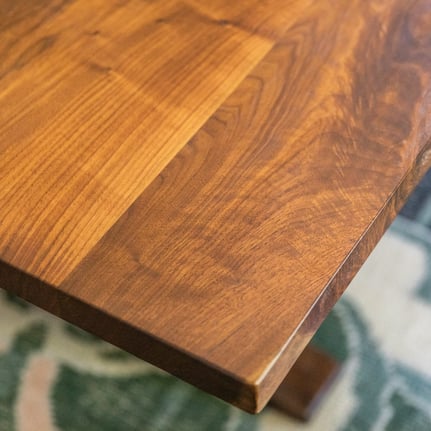
1. Look at the Grain Pattern
Solid wood has natural grain variation. The pattern:
- Changes gradually
- Is not perfectly symmetrical
- Wraps naturally around edges
Red flags:
- Identical grain patterns repeating across panels
- Perfect mirror-image grain
- Grain that stops abruptly at edges
Repeating grain almost always indicates veneer.
2. Examine the Edges and Undersides
Manufacturers often hide engineered materials where customers don’t look.
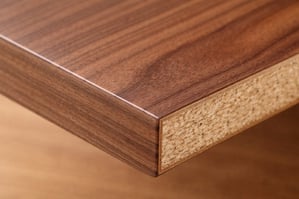 Check:
- The underside of table tops
- Inside drawers
- Back panels
- Bottom edges
- End Grain
Solid wood will show:
- Continuous grain
- Tool marks or natural variation
- Natural End Grain
MDF and veneer will look:
- Uniform
- Like there is straight grain along the end of the table
- Flat and textureless
- Like compressed fibers or layered sheets
3. Ask the Right Question (Not Just “Is It Solid Wood?”)
Instead of asking: “Is this solid wood?”
Ask:
- “Is the top solid wood or veneered?”
- “What is underneath the veneer?”
- “Are the panels solid wood or MDF?”
- “Can this piece be refinished in the future?”
Clear answers usually indicate honest construction.
Vague answers are a warning sign.
4. Check the Weight—But Don’t Rely on It Alone
Many people assume heavier furniture is solid wood. That’s not always true.
- MDF is often heavier than solid wood
- Veneered pieces can feel substantial
- Weight alone is not a reliable indicator
Instead, combine weight with visual inspection and construction details.
5. Look for Seasonal Wood Movement
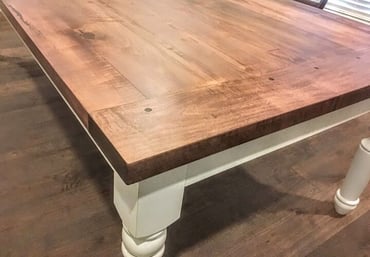 Solid wood furniture is built to allow for expansion and contraction.
Signs of solid wood construction:
- Breadboard ends
- Elongated screw holes
- Slotted fasteners
- Floating panels
Furniture that is rigidly fixed in all directions is often veneered or engineered.
6. Check How the Piece is Built
Solid wood furniture typically uses: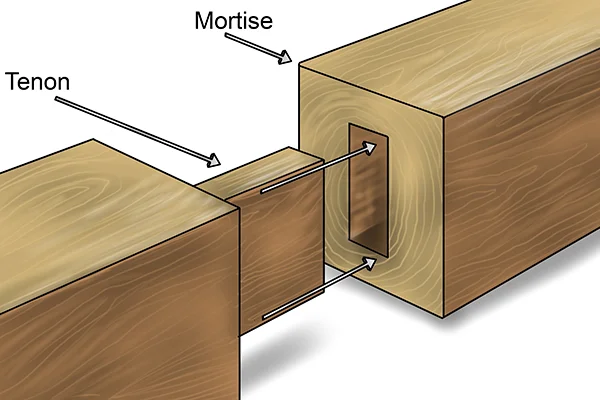
- Mortise and tenon joinery
- Dovetails
- Sliding dovetails
- Traditional wood joinery
Mass-produced veneer furniture often relies on:
- Screws
- Cam locks
- Staples
- Glue blocks
Strong joinery is both a durability indicator and a quality signal.
7. Look at the Price (Within Reason)
Solid wood furniture costs more to build.
If a large dining table is priced significantly lower than expected, it’s often because:
- The top is veneered
- The core is MDF
- Only the base is solid wood
While price alone isn’t definitive, it usually aligns with construction quality.
Why Solid Wood Furniture Costs More
Solid wood furniture requires: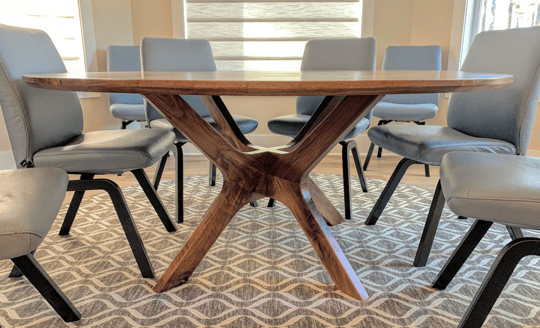
- Higher material costs
- More labor
- Skilled joinery
- Time for wood acclimation
- Careful finishing
It also offers:
- Longer lifespan
- Repairability
- Refinishability
- Structural strength
- Better long-term value
Veneer furniture is designed to look good quickly. Solid wood furniture is designed to last.
Why Veneer and MDF Are So Common
Veneer and MDF aren’t always “bad”—they’re just built for different goals.
Manufacturers use them because:
- They’re cheaper
- They’re dimensionally stable
- They reduce production time
- They work well for mass manufacturing
The problem arises when they’re marketed as solid wood without clear explanation.
When Veneer Might Be Acceptable
There are situations where veneer can make sense:
- Large cabinet panels
- Built-ins where movement must be minimized
The key is transparency. Veneer should be a design choice—not a hidden shortcut.
Why Solid Wood Matters for Custom Furniture
At Luke’s Furniture Company, solid wood construction is intentional.
Solid wood allows:
- Exact sizing
- Long-term durability
- Refinishing years later
- Structural repairs if needed
- Furniture that adapts to your home’s environment
For dining tables, mantles, and heirloom pieces, solid wood simply performs better over time.
Questions to Ask Before Buying Furniture
Before purchasing, ask:
- “Is every major component solid wood?”
- “What material is under the finish?”
- “Can this be refinished?”
- “How is the top constructed?”
- “What happens if it gets damaged?”
These questions quickly reveal what you’re really buying.
Final Thoughts: Know What You’re Paying For
Solid wood furniture isn’t about labels—it’s about construction.
Understanding how to identify real solid wood helps you:
- Avoid misleading marketing
- Compare furniture accurately
- Invest with confidence
- Choose pieces that last
Whether you’re buying custom or evaluating retail furniture, knowing the difference protects your investment.
Considering Solid Wood Furniture for Your Home?
If you’re looking for furniture built entirely from solid wood—and designed for real, everyday use—we’d be happy to help you explore options that fit your space and lifestyle.
→ Request a Quote
→ Explore Dining Tables and Other Furniture
→ Visit Our Wilmington, NC Showroom