
If you’ve been researching dining tables, you’ve likely come across the term “farmhouse table.”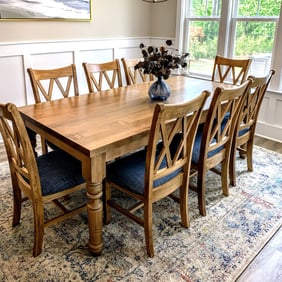
But what does it actually mean?
Depending on where you look, a farmhouse table might refer to:
- A rustic, distressed pine table
- A clean, modern wood table with simple lines
- Or a thick, solid wood statement piece built to last generations
The truth is, the meaning of farmhouse table has evolved significantly over the past decade. Understanding that evolution is the key to choosing the right table for your home.
The Origin of the Modern Farmhouse Table
The modern farmhouse trend gained national popularity through figures like Joanna Gaines, who helped bring a more relaxed, nostalgic aesthetic into American homes.
At the time, most furniture available to consumers was:
- Mass-produced
- Built overseas
- Made from veneers or lower-quality materials
The farmhouse table was a response to that.
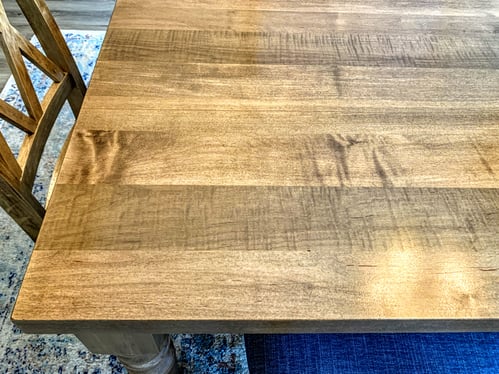 It represented:
- Authenticity
- Simplicity
- Connection to the past
These early farmhouse tables often featured:
- Heavy distressing
- Visible saw marks and wear
- A “reclaimed from a barn” appearance (some even built from reclaimed barnwood)
They weren’t just furniture—they told a story.
The Rise of DIY Farmhouse Tables
As the style grew in popularity, something important happened:
People started building their own.
DIY farmhouse tables became one of the most popular entry points into woodworking. For many, it was a first project—and a meaningful one.
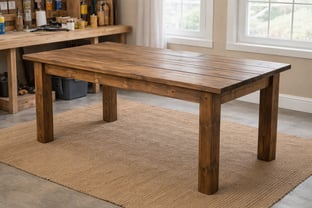
Typically, these tables were built from:
- Pine boards from big box stores
- Screwed-together construction
- Plank-style tops with visible gaps
And to be clear—there is real value in that.
There’s something deeply rewarding about building a table with your own hands. For a homeowner, those imperfections become part of the story.
But the reality is different when that same approach is used in a business setting.
Where DIY Construction Falls Short Commercially
When sold to customers, these same construction methods often lead to issues:
- Boards that warp or twist over time
- Tops that crack or separate
- Gaps that trap crumbs and debris
- Softer woods that dent and wear quickly
A DIY builder gets to learn from those challenges.
A customer, however, expects long-term performance.
That’s where the definition of a true farmhouse table began to shift.
The Evolution: From Rustic to Refined
As homeowners began living with heavily distressed tables, many realized something:
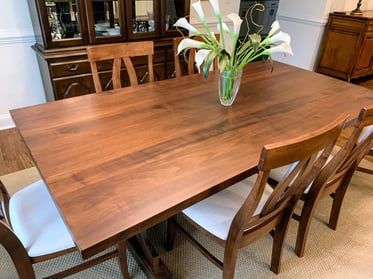
They didn’t want something that looked 100 years old.
They wanted something that would last 100 years.
This gave rise to what is often called “refined rustic.”
Instead of artificial distressing, the focus shifted to:
- Natural wood character (grain, variation, texture)
- Clean construction
- Durability and longevity
The craftsmanship itself became the story.
What a Farmhouse Table Means Today
Today, the term farmhouse table has become less about a specific look—and more about a set of principles.
Across styles, the best farmhouse tables share a few defining traits:
1. Solid Wood Construction
Not veneers. Not composites.
True farmhouse tables are built from hardwoods (usually American) like:
- Maple
- Oak
- Walnut
- Hickory
This is what gives the table its weight, presence, and longevity.
2. Thicker, More Substantial Design
Unlike much of modern furniture built from 3/4" material, farmhouse tables are intentionally more substantial.
You’ll often see:
- 1.5" to 3" thick tops
- Larger, more grounded legs
- A sense of visual weight and permanence
This is what makes it immediately clear: this is real wood.
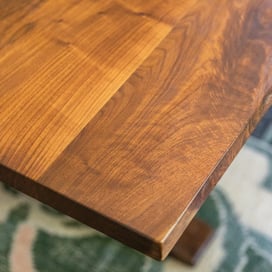 3. A Low-Sheen, Natural Finish
Instead of high-gloss coatings, farmhouse tables typically use:
- Satin or matte finishes
- Durable protective topcoats
- Finishes that highlight—not hide—the wood
The goal is simple:
Let the material speak for itself.
4. A Sense of Gathering and Story
At its core, the farmhouse table is still about something deeper:
- Family dinners
- Holidays
- Conversations that stretch late into the night
It’s designed to feel like the center of a home—not just another piece of furniture.
The Many Styles of Farmhouse Tables Today
One of the biggest changes is how many directions the style has taken.
Today, “farmhouse” includes a wide range of aesthetics:
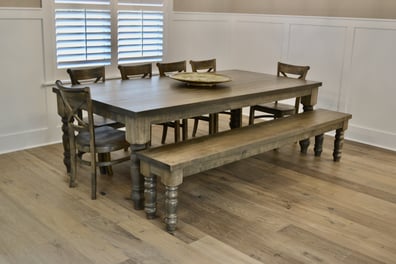
Classic Farmhouse
- Four legs, thicker tops
- Timeless, grounded proportions
- A straightforward, enduring look
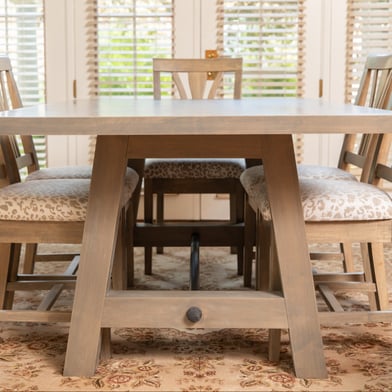
Rustic Farmhouse
- More texture and character
- Heavier visual weight
- Often inspired by agricultural forms
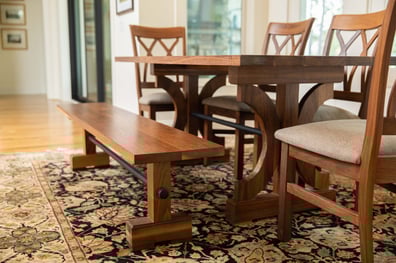
Modern Farmhouse
- Cleaner lines
- Subtle detailing
- Blends traditional warmth with modern simplicity
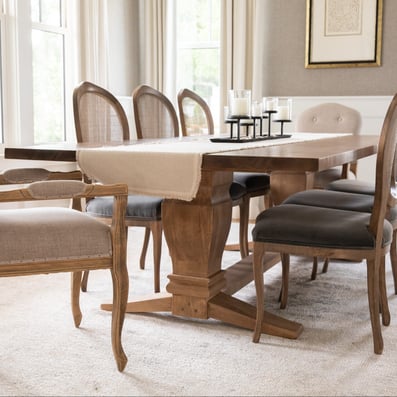
Coastal Farmhouse
- Lighter tones
- Airy feel
- Designed to complement coastal homes
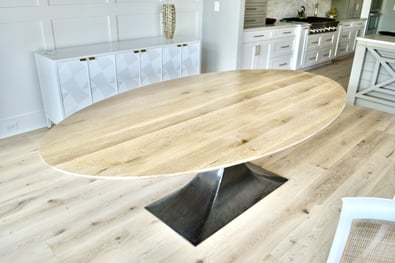
Industrial / Urban Farmhouse
- Wood paired with steel
- Strong contrast between materials
- A more architectural look
The styles may differ—but the foundation remains the same: solid wood, thoughtful design, and craftsmanship.
So… Are Farmhouse Tables Still in Style?
Yes—but not in the way they once were.
The overly distressed, “barnwood replica” trend has largely faded.
What has replaced it is something more enduring:
- Clean, solid wood construction
- Honest materials
- Timeless proportions
In many ways, the farmhouse table didn’t disappear—it matured.
What to Look for When Choosing a Farmhouse Table
If you’re considering one for your home, here are a few things that matter:
- Solid wood construction (not veneers)
- Proper joinery and wood movement considerations
- No gaps in the top
- Hardwood species, not soft pine or cypress.
- A durable, low-sheen finish
These are the details that determine whether a table lasts 3 years—or 30+.
A Final Thought: What “Farmhouse” Really Means Now
Today, farmhouse table has become shorthand for something much more meaningful: A solid wood, heirloom-quality table built with intention.
It’s less about copying the past—and more about building something that belongs in it.
If You’re Considering a Custom Farmhouse Table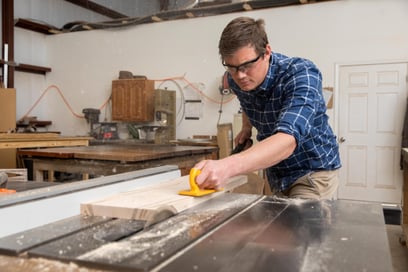
At Luke’s Furniture Company, every table is designed around how you live.
Whether that means:
- A classic four-leg design with a substantial top
- A trestle base that feels rooted and architectural
- A round table for more intimate gatherings
- Or a wood-and-steel combination for a more modern space
Each piece is built from solid hardwood, with a focus on durability, proportion, and long-term performance.
The goal isn’t to recreate a trend.
It’s to build a table that will still feel right in your home 20 years from now.
Explore Options or Start a Design
If you’re in the early stages of exploring:
Or, if you’re ready to take the next step:
OR
Either way, the process starts with understanding what you want your table to become over time.